
The Great Wildebeest Migration in Kenya is one of Africa's most sought after wildlife experiences, but it is also one of the most misunderstood. The migration is not a single event and it does not run to a timetable. It is a continuous movement of wildebeest and other grazing animals through the wider Serengeti and Mara ecosystem, responding to rainfall, grazing conditions and water.
For Kenya safari travellers, the key destination is the Masai Mara National Reserve and surrounding Mara landscapes. The challenge is to plan enough time in the ecosystem without promising a particular crossing on a particular day.
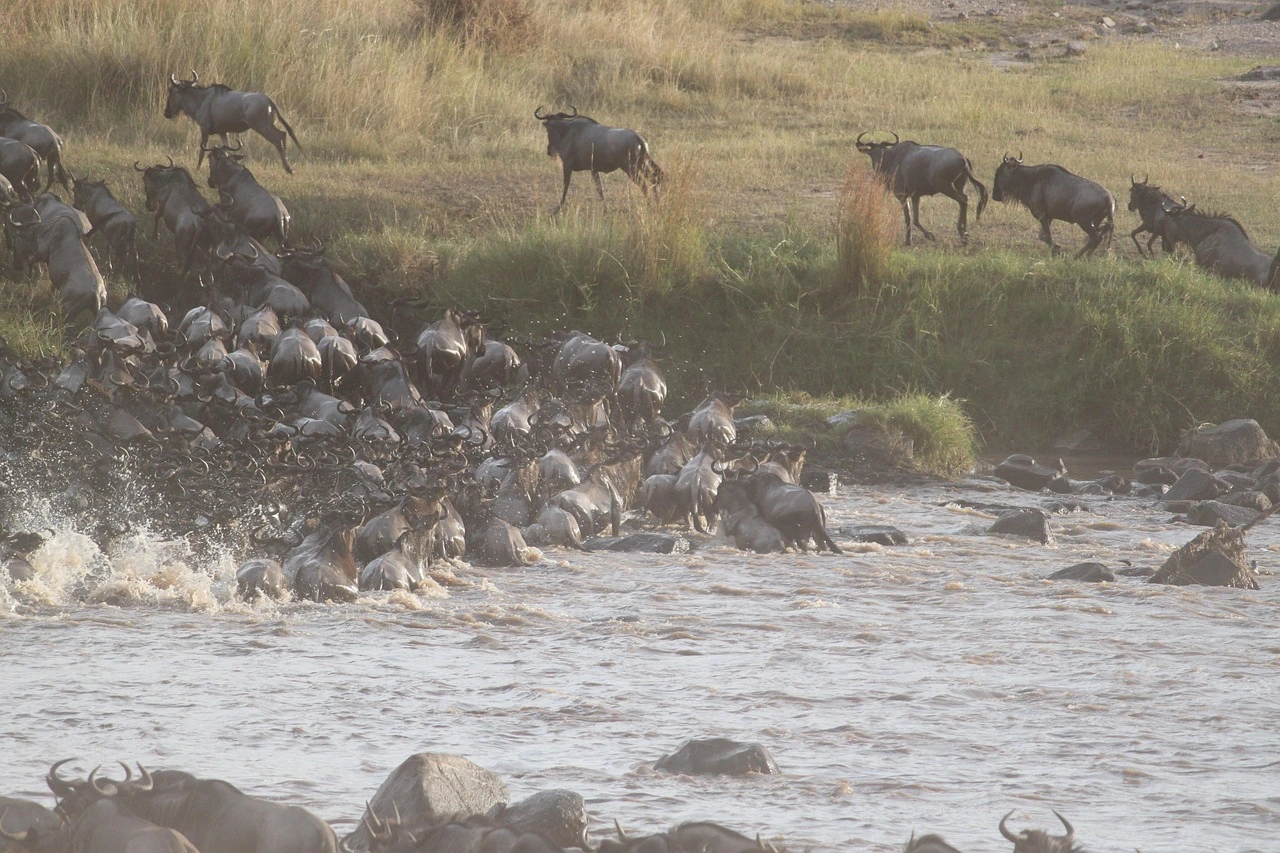 The migration is a moving natural system. Herd locations and river crossings change with rainfall, grazing and river conditions.
When does the Great Migration reach Kenya?
The Mara Conservancy states that the wildebeest migration usually begins in the Mara around June or July and can continue until November. That broad window is useful for planning, but it should never be treated as a promise that the herds will be in one exact location on a specific travel date.
Read the Mara Conservancy's migration guidance for current information and responsible viewing advice.
Why river crossings are impossible to schedule
Many travellers picture migration season as a sequence of predictable Mara River crossings. In reality, herds may reach a riverbank, wait, move away, cross elsewhere or remain on one side for hours or days. A crossing can begin with little warning.
This unpredictability is exactly why Greatlink Safaris does not sell a “guaranteed river crossing.” A well designed migration safari instead gives you repeated opportunities to explore the Mara, follow current local information and enjoy the entire ecosystem even if no crossing takes place while you are present.
The migration is bigger than the crossing
River drama attracts attention, but the migration experience also includes enormous herds moving across grassland, grazing lines stretching across the horizon, dust, predator activity, newborn or young animals depending on the wider seasonal cycle, scavengers and the constant interaction between wildlife and landscape.
Travellers who focus only on a riverbank can miss some of the most rewarding scenes elsewhere in the ecosystem.
How many nights should you spend in the Masai Mara?
For a migration focused safari, three or four nights in the Mara usually gives a more realistic opportunity to experience changing wildlife conditions than one rushed day. More time also reduces pressure on the guide to race between sightings.
If the Mara is one part of a longer Kenya itinerary, consider combining it with Lake Nakuru, Ol Pejeta, Samburu or Amboseli. The 7 Day Samburu, Ol Pejeta, Lake Nakuru and Masai Mara Safari is one example of a route that gives the Mara context within a broader Kenya journey.
Morning, afternoon or full day game drives?
Migration itineraries benefit from flexibility. Morning drives can take advantage of cooler temperatures and soft light. Afternoon drives can be productive for predators and landscape photography. A full day with a picnic lunch can make sense when current herd information suggests wildlife activity is far from camp.
The right choice depends on accommodation location, park or conservancy rules, road conditions and the day's wildlife information.
Photography during the migration
Migration photography works best when the vehicle is treated as a patient observation platform rather than a race between sightings.
- Use a telephoto lens for behaviour, portraits and river scenes.
- Keep a wider lens available for large herds, dust and landscape context.
- Protect equipment from dust during dry periods.
- Use faster shutter speeds for running animals and crossing action.
- Photograph behaviour before and after a crossing, not only the moment animals enter the water.
- Do not pressure a guide to break park rules for a closer photograph.
Travellers who want the entire itinerary designed around photography can compare the 10 Day Amboseli and Masai Mara Wildlife Photography Safari.
Hot air ballooning during migration season
A Hot Air Balloon Safari gives a completely different perspective on the Mara. Flights normally operate around sunrise and follow wind conditions rather than a fixed wildlife route. During migration season, large herds may be visible from the air, but no specific wildlife encounter can be guaranteed.
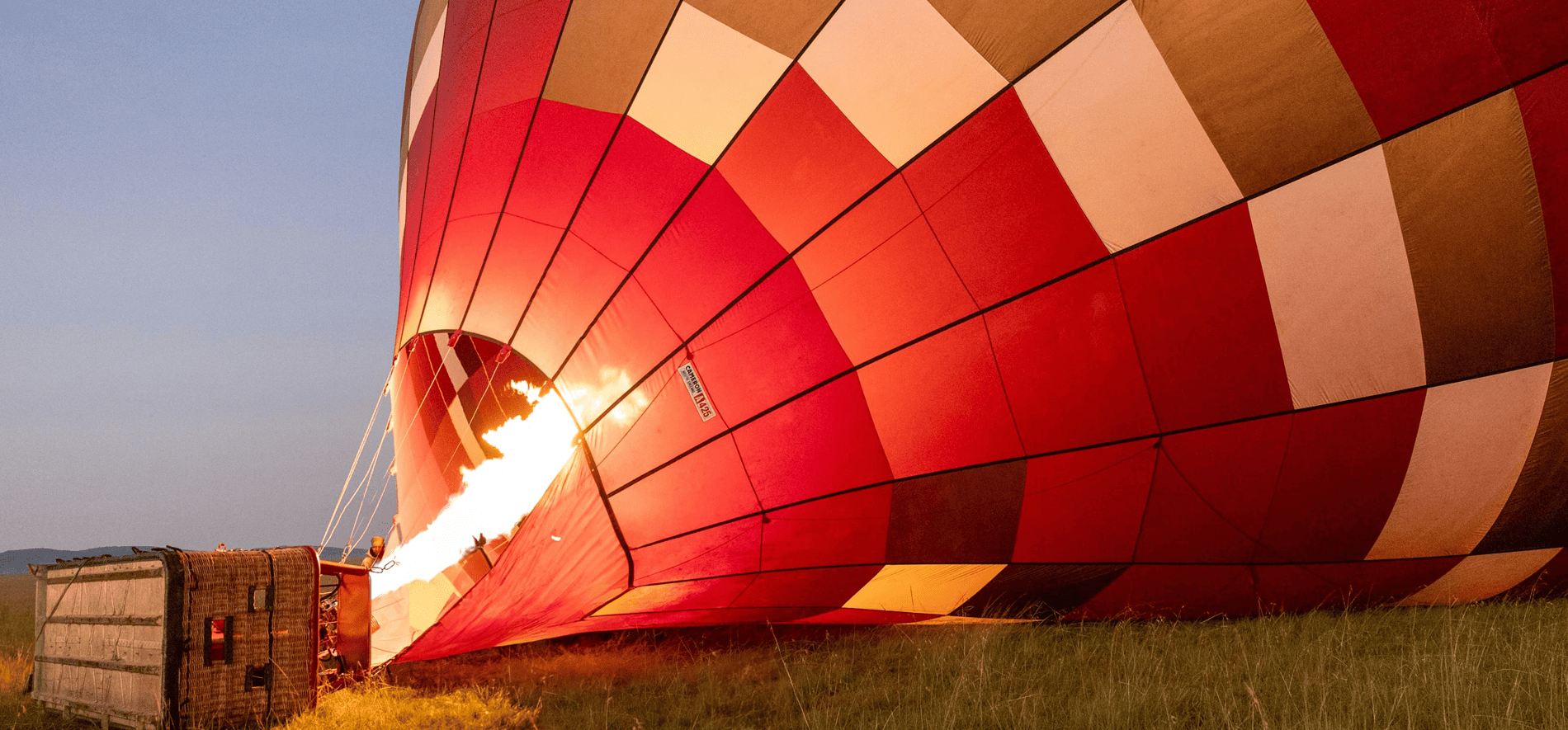 A balloon safari can complement migration game drives with a wide aerial perspective over the ecosystem.
Responsible river crossing etiquette
The Mara Conservancy specifically advises visitors not to crowd or harass wildebeest at crossing points. Vehicles should remain back from the river, avoid blocking the animals' approach and never push herds toward unsuitable crossing locations.
Responsible viewing matters because vehicle pressure can change animal behaviour. A dramatic photograph is never more important than allowing wildlife to choose its own route.
- Stay inside the vehicle except at designated places.
- Keep noise low while herds gather.
- Do not ask the guide to drive between the herd and the river.
- Do not block movement routes.
- Accept that waiting is part of migration viewing.
What else can you see in the Mara during migration season?
The Mara remains a complete wildlife ecosystem. Lion, leopard, cheetah, elephant, buffalo, giraffe, hyena, jackal, hippo, crocodile and many antelope species are all part of the safari experience. The migration may increase predator and scavenger activity in some areas, but no species is guaranteed.
Use the Greatlink Safaris Wildlife Guide to learn more about the animals you may encounter.
Is July or August better than September?
There is no universal winner. July and August are popular because many travellers associate them with migration activity in the Mara, but herd location varies. September can still be excellent, and October may also hold substantial migration activity depending on rainfall.
Your travel dates should consider accommodation availability, crowd tolerance, school holidays, budget and whether migration is the only objective or one part of a wider safari.
What if the migration is late or early?
This is possible because rainfall patterns influence the system. A strong migration itinerary should therefore be enjoyable even without a crossing. The Mara's resident wildlife, landscapes and predator populations remain major reasons to visit.
Should you stay inside the reserve or in a conservancy?
Both can work. The choice depends on location, game drive rules, accommodation style, access to current herd areas and the balance you want between migration focus and overall safari atmosphere. Greatlink Safaris selects accommodation after considering your dates and intended game drive areas rather than assuming one location is always best.
Where should you stay for migration season?
There is no single camp location that is always closest to the herds. The best accommodation depends on your travel dates, the part of the Mara you want to explore, driving rules in the surrounding area and the current movement of wildlife. A camp that is perfect for one month may be less convenient several weeks later.
For that reason, Greatlink Safaris looks at the intended game drive area first and accommodation second. A beautiful lodge is not automatically the best migration base if it creates long daily transfers to the wildlife zone you want to explore.
How to handle peak season crowds
Migration season is one of the busiest periods in the Mara. Travellers who value quieter wildlife viewing should understand that famous river points and predator sightings can attract many vehicles. A private safari gives more control over departure time and how long to remain at a sighting, but it cannot remove other visitors from a public reserve.
Good guiding matters. A guide may decide that a quieter sighting away from a crowded crossing point is better than joining a large concentration of vehicles. That decision can produce a more natural and enjoyable safari.
What to pack for a migration safari
- Neutral, lightweight clothing with a warm layer for cool early mornings.
- Sun protection, including a hat, sunscreen and sunglasses.
- Binoculars, even if you are carrying a long camera lens.
- Dust protection for cameras and electronics.
- Enough memory cards and spare batteries for long game drive days.
- A small soft bag if your itinerary includes light aircraft flights with baggage limits.
Can families experience the migration?
Yes, but parents should plan realistic game drive lengths. Waiting at a river can involve long quiet periods before anything happens. Families may prefer a mix of shorter drives, general wildlife viewing and one or two longer migration focused days rather than spending every hour at a crossing point.
Frequently asked questions
When is migration season in Kenya?
The Mara Conservancy says migration in the Mara usually begins around June or July and continues until November. Exact timing changes with environmental conditions.
Can Greatlink Safaris guarantee a river crossing?
No. No responsible safari operator can guarantee a natural crossing at a specific time or place.
How many days should I allow?
Three or four nights in the Mara is a practical starting point for migration focused travel. Longer stays provide more flexibility.
Is the migration suitable for photographers?
Yes. The scale, behaviour, dust, predators and landscape can be exceptional for photography. A private photography focused vehicle can improve patience and positioning.
Can I combine the migration with other Kenya parks?
Yes. Samburu, Ol Pejeta, Lake Nakuru and Amboseli all add different wildlife and landscapes to a migration itinerary.
Plan for the ecosystem, not a single moment
The strongest migration safari is built around time, flexibility and responsible wildlife viewing. Explore the Great Wildebeest Migration experience or browse the Greatlink Safaris safari collection to build the Mara into a private Kenya itinerary.