About the Blue Monkey
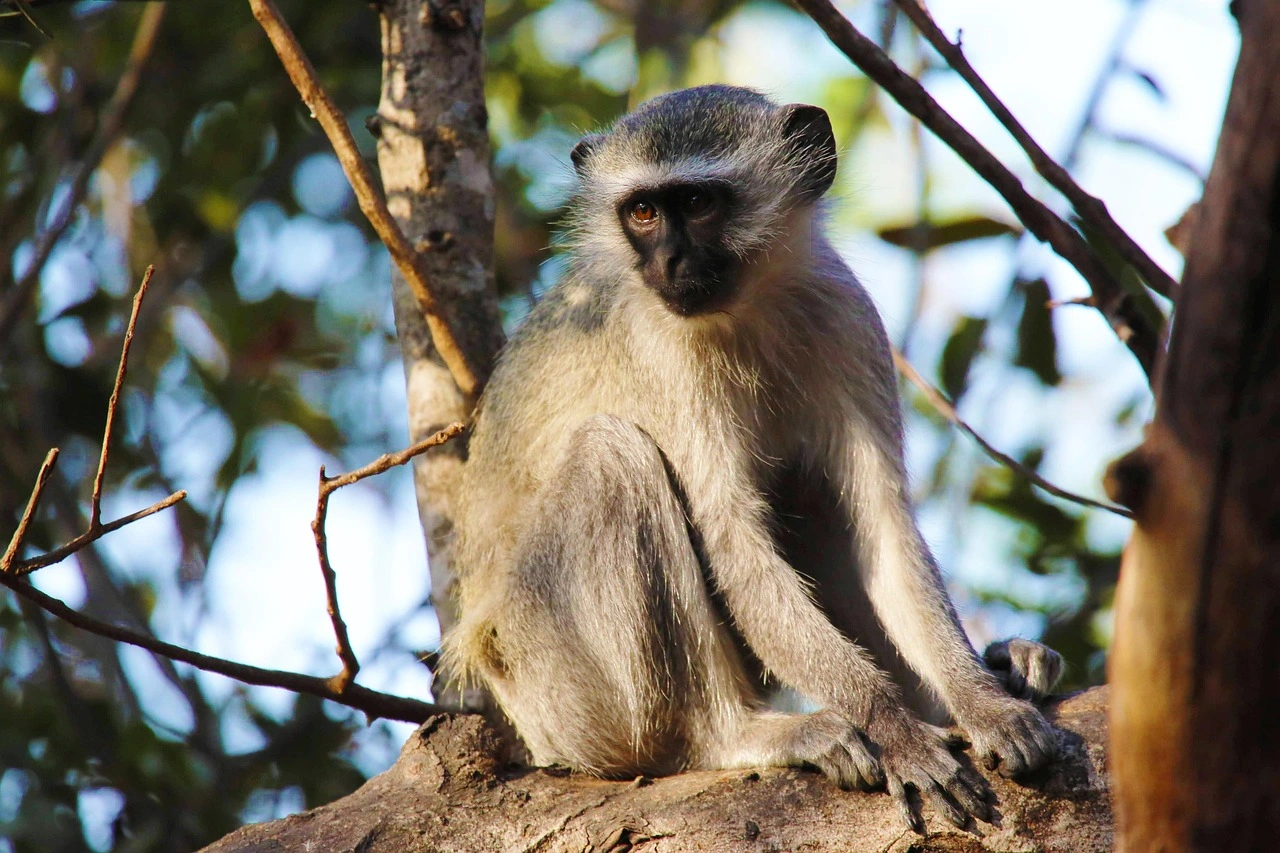
Blue monkeys have a dark slate-grey body, darker limbs and cap, and a pale or whitish throat. Colour varies between regional forms, so identification is best combined with location.
They live in social groups and spend most of their time in trees, feeding on fruit and leaves while moving through the middle and upper canopy. Alarm calls warn group members about eagles and terrestrial predators.
Safari context in Kenya: Within the current Greatlink Safaris destination network, useful places to look for this species include Aberdare National Park. Sightings remain natural and unpredictable, so Greatlink Safaris plans around habitat, season and realistic wildlife expectations rather than guarantees. Travellers can also explore the Kenya wildlife guide or compare private Kenya safaris that visit suitable ecosystems.
Conservation: Blue monkeys are Least Concern at species level, though local forest populations depend on intact habitat corridors. For the latest global assessment and taxonomic notes, consult the IUCN conservation reference. Kenya protected area information is also available from the Kenya Wildlife Service.
Interesting facts and identification clues
- Despite the name, the coat appears grey to bluish rather than bright blue.
- Fruit is important when available, but leaves and insects broaden the diet.
- Groups communicate with calls that carry through dense forest.
- They are more arboreal than olive baboons.
- Aberdare forest habitat offers much better chances than open savannah.
Responsible viewing: Keep a respectful distance, avoid blocking the animal’s route, keep noise low and follow the driver guide’s instructions. Wildlife behaviour changes with weather, breeding, food, water and human pressure, so every encounter should be treated as an unscripted observation.
Content reviewed 1 Oct 2026