About the African Buffalo
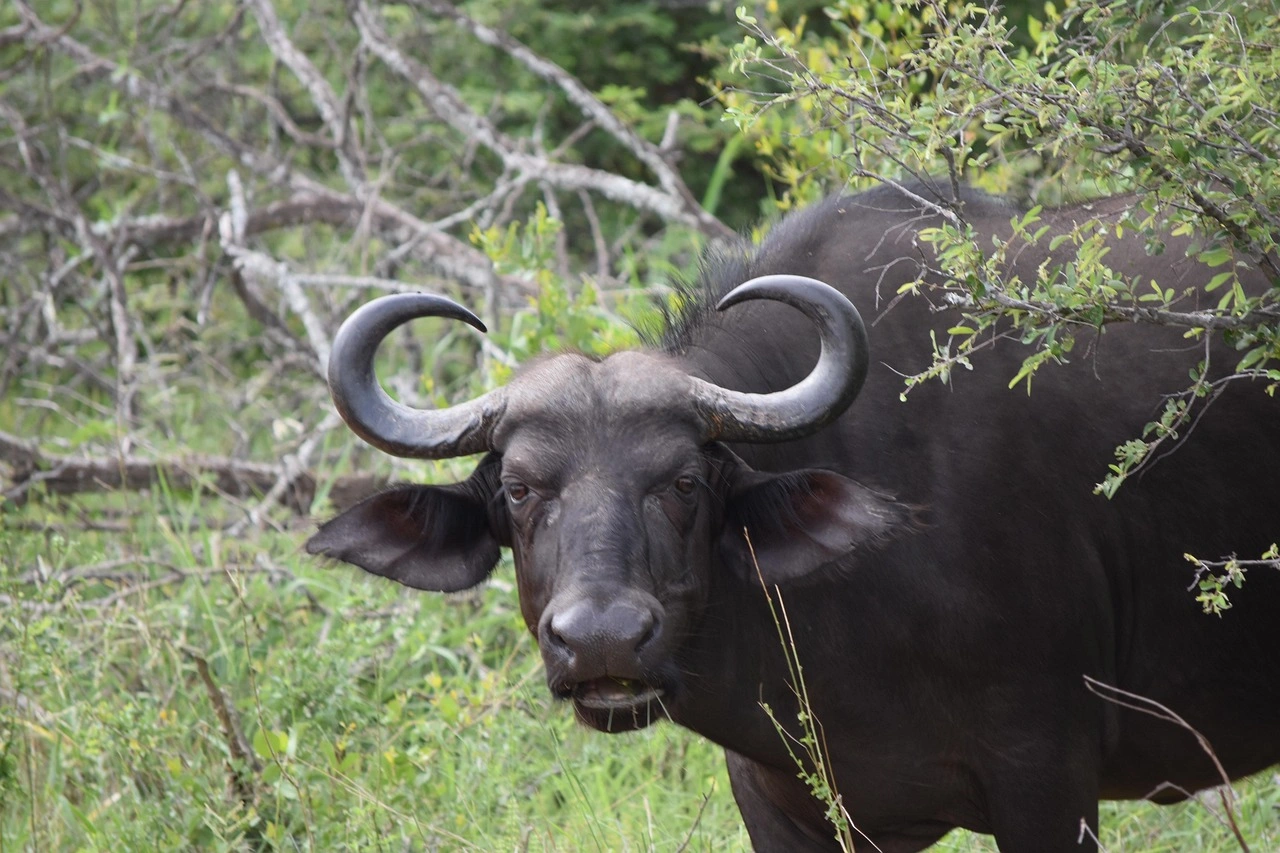
African buffalo are heavy-bodied bovids with a dark coat, broad ears and thick horns. Mature bulls develop large horn bosses that meet across the forehead, while cows and younger animals have lighter, narrower horn bases.
They are strongly social. Females, calves and many males move in herds that may split and reform as grazing and water conditions change. Old bulls sometimes form small bachelor groups or spend periods alone. Herd members use collective vigilance and can defend calves when predators approach.
Safari context in Kenya: Within the current Greatlink Safaris destination network, useful places to look for this species include Ol Pejeta Conservancy, Aberdare National Park, and Amboseli National Park. Sightings remain natural and unpredictable, so Greatlink Safaris plans around habitat, season and realistic wildlife expectations rather than guarantees. Travellers can also explore the Kenya wildlife guide or compare private Kenya safaris that visit suitable ecosystems.
Conservation: Kenya retains important buffalo populations in major protected areas, but disease, habitat conversion, drought and conflict around protected-area boundaries can affect local herds. For the latest global assessment and taxonomic notes, consult the IUCN conservation reference. Kenya protected area information is also available from the Kenya Wildlife Service.
Interesting facts and identification clues
- Buffalo need regular access to water and are often found near rivers, swamps or permanent waterholes.
- Their broad muzzle is adapted for cropping large amounts of grass.
- Large herds can influence vegetation and provide prey for lions.
- Older bulls often carry worn horn tips and mud-caked coats from wallowing.
- Give solitary bulls extra space: they can be less predictable than animals inside a herd.
Responsible viewing: Keep a respectful distance, avoid blocking the animal’s route, keep noise low and follow the driver guide’s instructions. Wildlife behaviour changes with weather, breeding, food, water and human pressure, so every encounter should be treated as an unscripted observation.
Content reviewed 1 Oct 2026