About the Impala
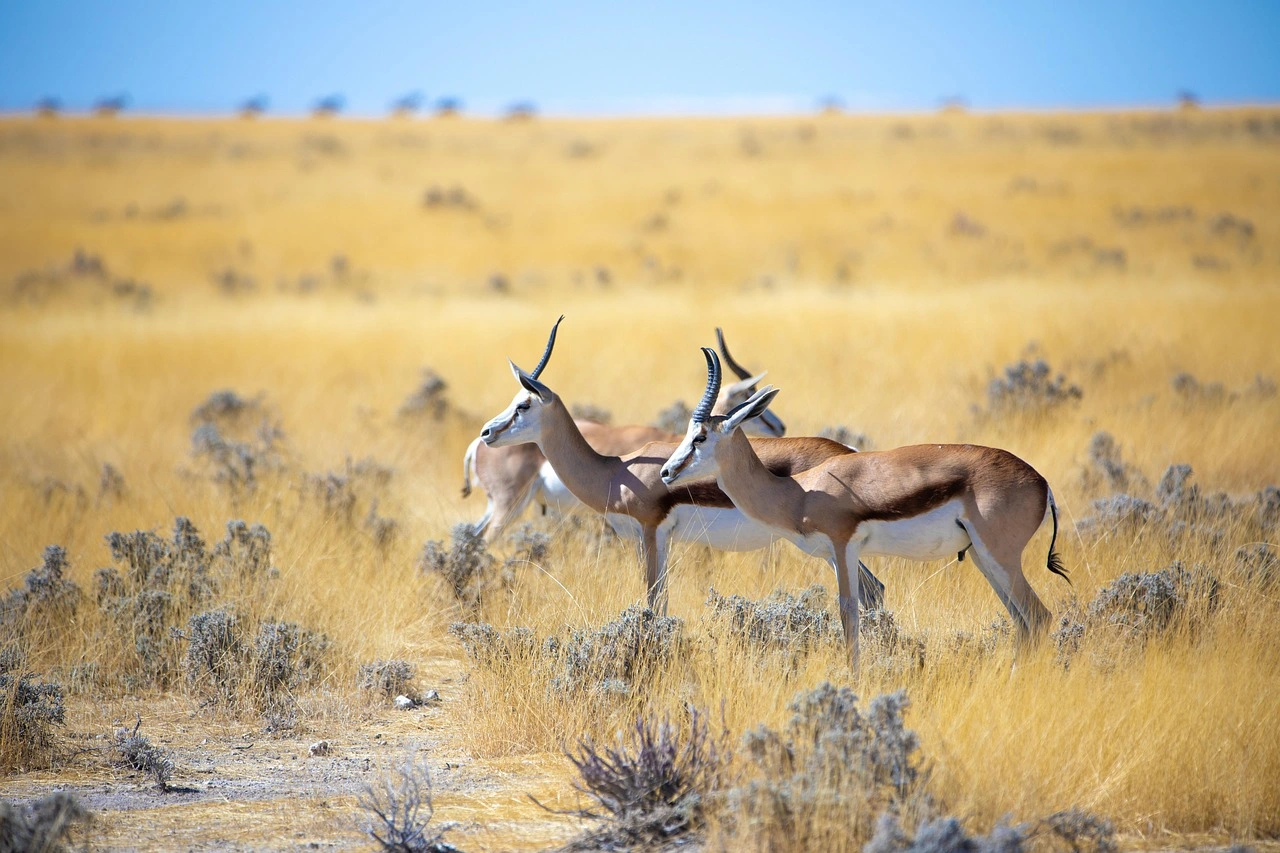
Impala are medium-sized antelopes with a glossy reddish-brown back, pale belly and distinctive black markings on the rump and hind legs. Only males carry the long ridged horns.
Females and young form herds that can become large where food is abundant, while mature males may defend territories during breeding periods. Their spectacular leaps help them escape predators and navigate bush.
Safari context in Kenya: Within the current Greatlink Safaris destination network, useful places to look for this species include Lake Nakuru National Park, Nairobi National Park, and Buffalo Springs National Reserve. Sightings remain natural and unpredictable, so Greatlink Safaris plans around habitat, season and realistic wildlife expectations rather than guarantees. Travellers can also explore the Kenya wildlife guide or compare private Kenya safaris that visit suitable ecosystems.
Conservation: Impala remain Least Concern and are locally abundant, although habitat loss and heavy hunting can reduce populations outside protected areas. For the latest global assessment and taxonomic notes, consult the IUCN conservation reference. Kenya protected area information is also available from the Kenya Wildlife Service.
Interesting facts and identification clues
- Impala combine grazing and browsing, allowing them to use changing seasonal food.
- They can make long, high bounds when alarmed.
- Black tufts above the hind hooves are a useful identification clue.
- Males often become more territorial during the rut.
- They are important prey for leopard, cheetah, wild dog and lion.
Responsible viewing: Keep a respectful distance, avoid blocking the animal’s route, keep noise low and follow the driver guide’s instructions. Wildlife behaviour changes with weather, breeding, food, water and human pressure, so every encounter should be treated as an unscripted observation.
Content reviewed 1 Oct 2026